
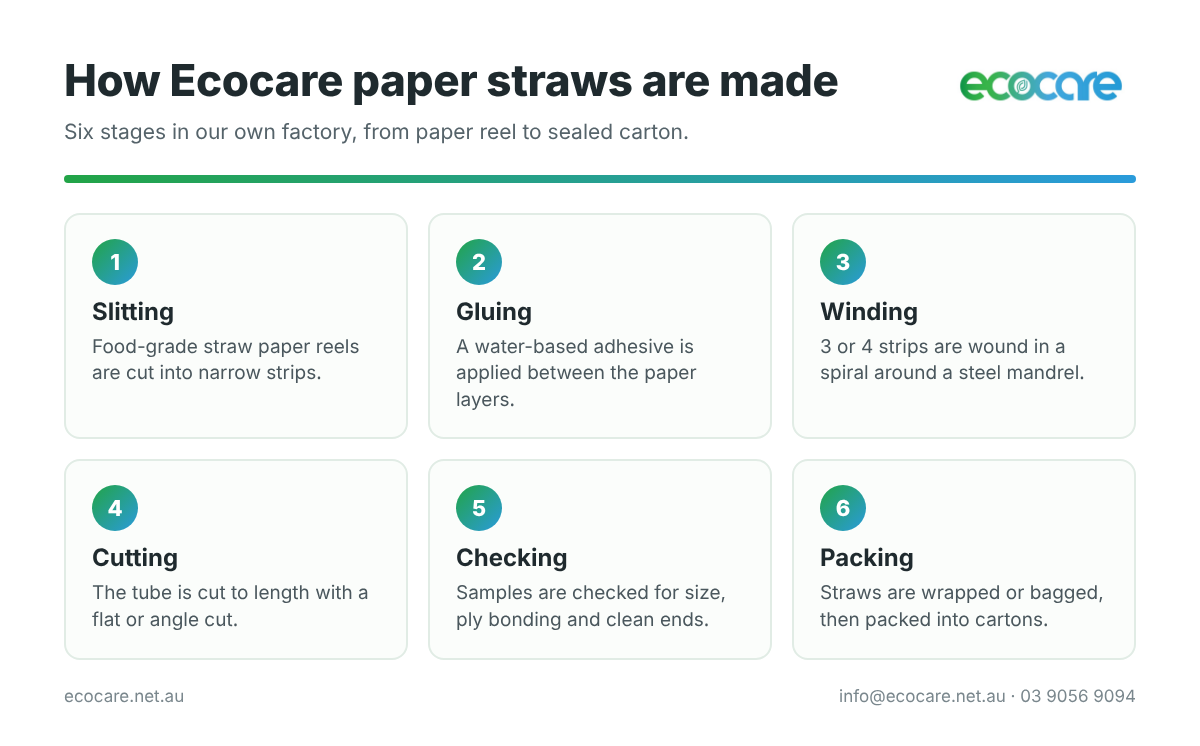
A paper straw looks simple: a tube of paper. But the difference between a straw that lasts through a drink and one that unravels halfway comes down to how it is made. Ecocare makes its paper straws in its own factory. Here is what happens at each stage, and what to look for when you compare straws.
1. Slitting the Paper
Production starts with large reels of food-grade straw paper. The reels are slit into narrow strips. The width of each strip and the number of strips used depend on the size of the straw.
2. Gluing the Layers
As the strips feed into the machine, a water-based adhesive is applied between them. Even glue coverage is what keeps the layers together once the straw is wet. Too little glue and the layers separate; too much and the straw can feel sticky or stiff.
3. Winding the Tube
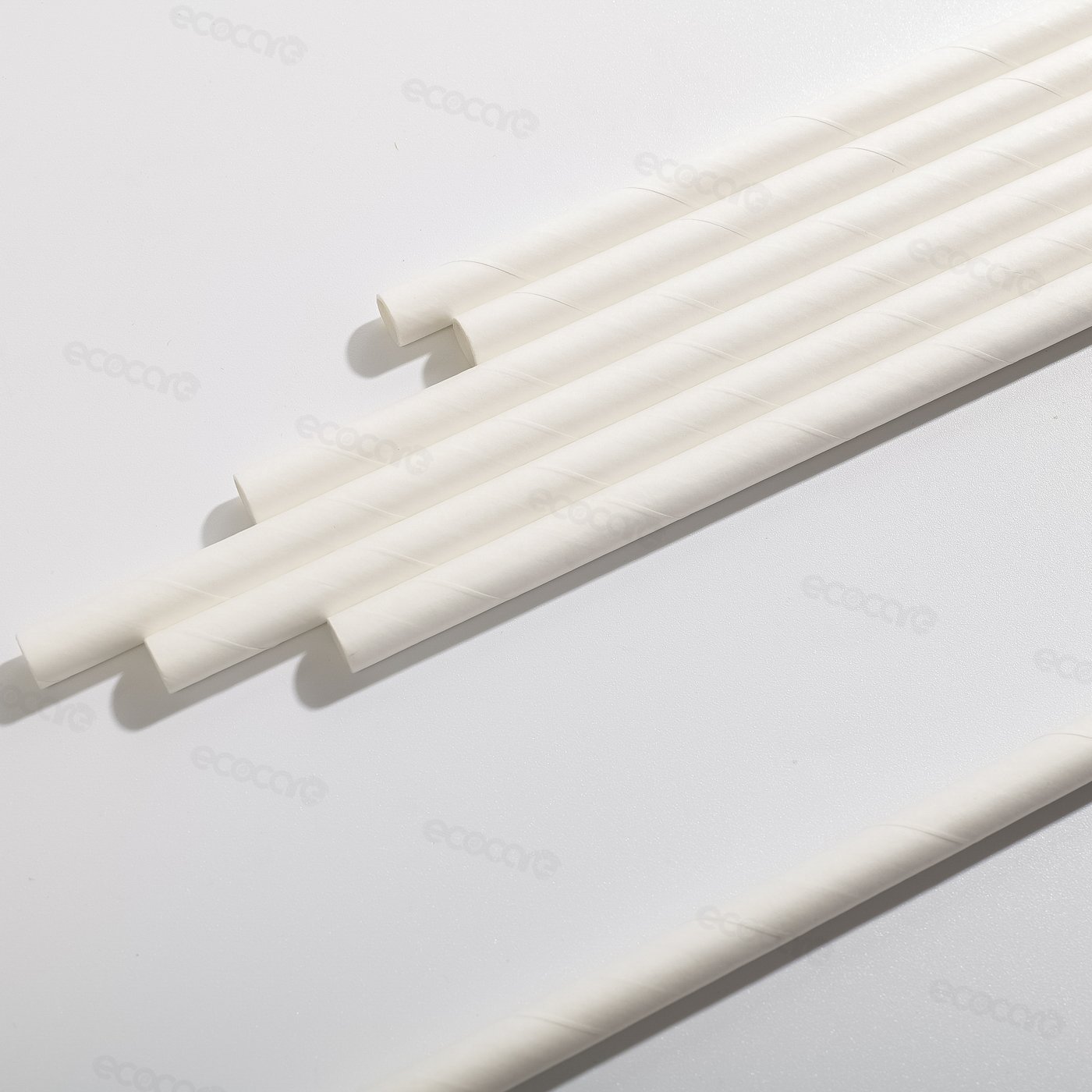
The glued strips are wound in a spiral around a steel mandrel to form a continuous tube. Ecocare’s 6 mm straws are wound from 3 plies; our 8 mm, 10 mm and 12 mm straws use 4 plies for extra stiffness.
4. Cutting to Length
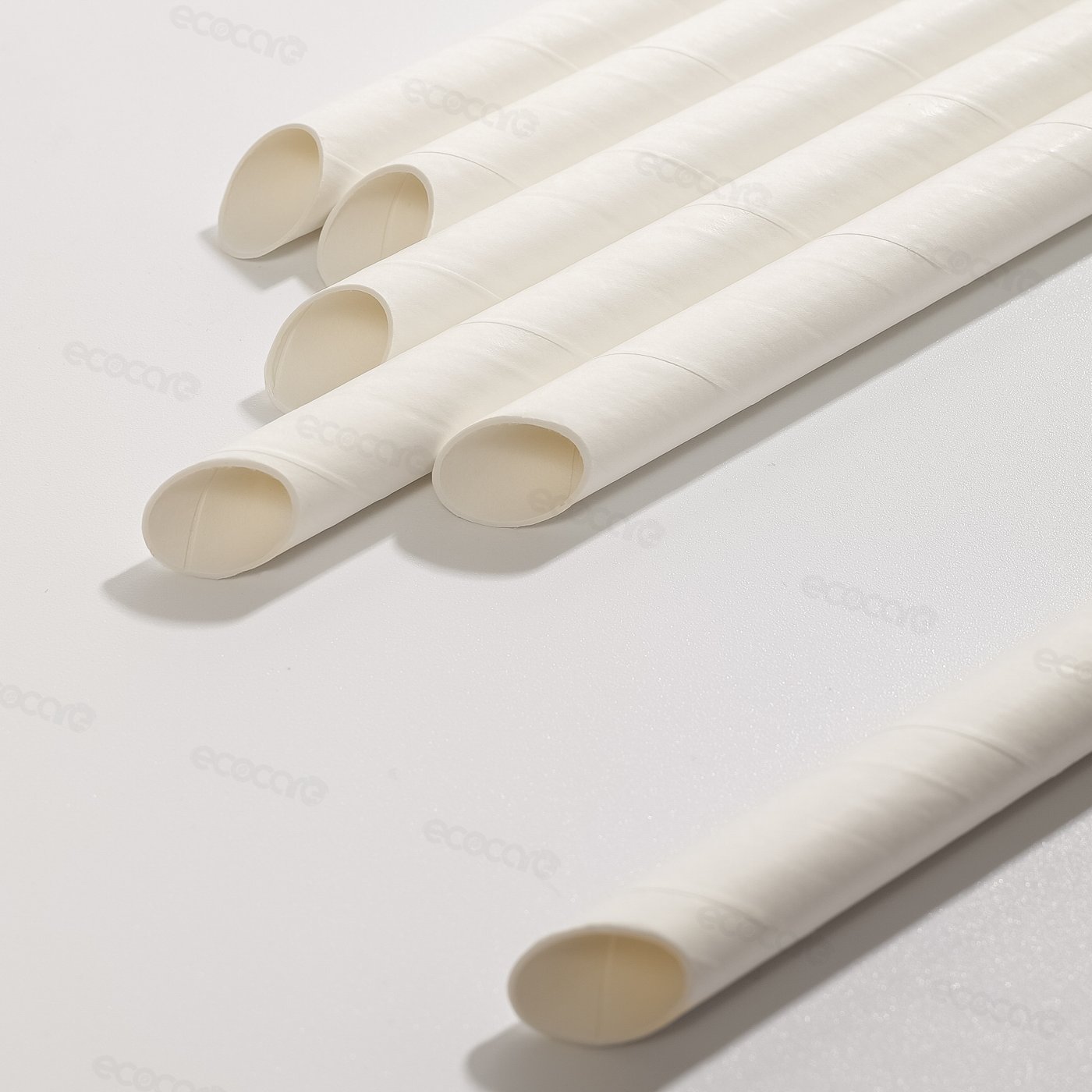
The tube is cut to length – 150, 200 or 230 mm – with either a flat cut or an angle cut. Angle-cut ends, used on our 8×230 mm and 12×230 mm straws, make it easier to pierce a cup lid.
5. Checking Quality
Samples from each run are checked for diameter, length, layer bonding and clean ends. Straws with loose layers, rough edges or uneven walls are removed before packing.
6. Wrapping and Packing
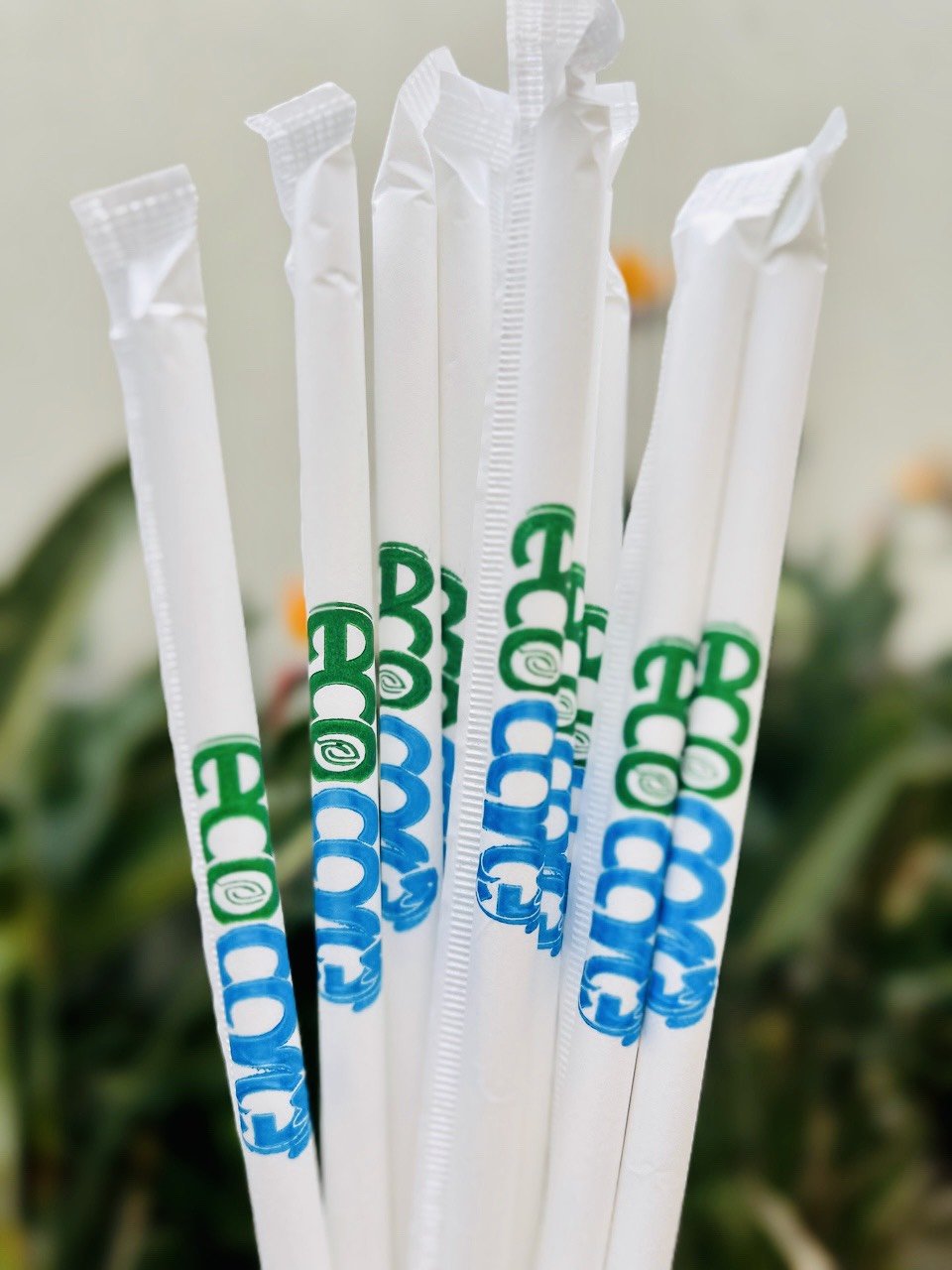
Some straws are individually wrapped in paper; others are bagged in packs of 50 to 250. Packs go into cartons that are sealed, labelled and shipped to our Melbourne warehouse.
What Affects Paper Straw Quality
- Paper: food-grade straw paper with consistent thickness.
- Plies: enough layers for the diameter – wider straws need more.
- Glue: even coverage between every layer.
- Cutting: clean ends without frayed edges.
- Storage: dry, sealed cartons until use.
How to Test a Paper Straw
Put a sample in your most popular drink and leave it for as long as a customer usually takes to finish it. Check that it stays firm, the layers stay bonded and the end is comfortable to drink from. Test several straws from the same pack to see how consistent they are. Our guides to straw sizes and buying bulk paper straws explain what to check next.
Frequently Asked Questions
What are paper straws made of?
Layers of food-grade paper bonded with a water-based adhesive.
Why do some paper straws go soggy?
Usually because of too few layers, uneven glue or poor-quality paper. A well-made straw should stay firm for the time it takes to finish a drink.
What is the difference between 3-ply and 4-ply straws?
4-ply straws have an extra layer of paper, which adds stiffness. Ecocare uses 3 plies for 6 mm straws and 4 plies for wider straws.
See Our Paper Straws
Browse Ecocare straight paper straws and customised straws, learn more about Ecocare, or contact us for samples.
About Ecocare: Ecocare supplies paper straws, paper food containers and wooden cutlery to cafés, restaurants, caterers and distributors across Australia. Our paper straws and paper containers are made in our own factory and shipped to our Melbourne warehouse in Campbellfield.