

For cafés, restaurants, juice bars and takeaway businesses, buying paper straws in bulk can simplify purchasing and help control operating costs. However, choosing a supplier based only on price may lead to problems with durability, drink compatibility or inconsistent product quality. These issues can affect customer satisfaction and create unnecessary waste.
The right purchasing decision depends on how the straws will be used, how frequently they are needed and what quality standards the business expects. In this article, Ecocare explains the key factors to consider when buying paper straws in bulk, helping food service businesses select products that suit their daily operations.
Assess Paper Straws for Durability and Performance
One of the first things to consider is how well the straws maintain their structure during use. Paper straws come into contact with liquid for extended periods, so their construction can influence how long they remain functional.
A suitable product should retain its shape during normal drinking and resist becoming soft too quickly. This is particularly important for cafés and restaurants where customers may take time to finish iced coffee, juice or other cold beverages.
Paper quality, the number of layers, adhesive and manufacturing consistency can all affect performance. However, a higher layer count alone does not guarantee better results. Businesses should test samples in the drinks they serve most often before placing a large order.
It is also useful to check whether the straws develop loose paper fibres, split at the edges or become uncomfortable to use. Practical testing helps identify these issues before they affect a large quantity of stock.
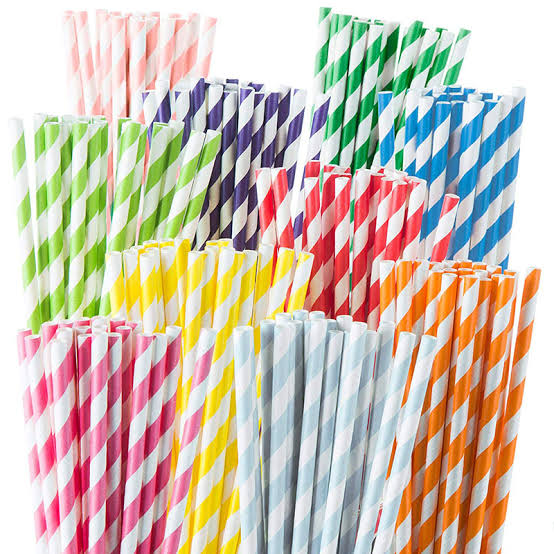
Choose Paper Straws in the Right Size
Straw dimensions should match the drinks on the menu. A straw that is too short may sit below the lid, while one that is excessively long can be awkward to handle. Diameter is equally important because different beverages require different levels of flow.
Narrower straws may suit water, soft drinks and some juices, whereas thicker options can be more appropriate for smoothies or beverages containing fruit pulp. Businesses serving bubble tea may need wider straws designed to accommodate tapioca pearls.
Before ordering, review the cup sizes and lid openings used across the business. Matching straw length and diameter to these specifications can improve customer convenience and reduce the likelihood of ordering unsuitable products.
If the menu includes several drink categories, consider keeping a small range of sizes rather than using one type for every beverage. This approach supports better functionality while avoiding unnecessary product variety.
Compare Paper Straw Suppliers and Product Specifications
Supplier reliability is just as important as the product itself. A business that depends on daily takeaway sales needs consistent stock availability, predictable delivery times and clear product information.
Before committing to a bulk order, ask suppliers about material composition, dimensions, packaging quantities and recommended applications. If specific food-contact or quality documentation is relevant to the business, request the appropriate information rather than relying on general marketing claims.
It is also worth checking minimum order quantities and whether the supplier can accommodate changes in demand. Seasonal cafés or businesses with fluctuating sales may benefit from purchasing arrangements that allow them to maintain adequate stock without tying up too much storage space or working capital.
Requesting samples is a practical way to compare options. Test the products under normal service conditions and assess whether their performance remains consistent across different batches when possible.

Calculate the Overall Cost of Buying Paper Straws in Bulk
Bulk purchasing often reduces the price per straw, but the lowest unit price does not always represent the best value. Businesses should also consider shipping fees, minimum order requirements, storage costs and the risk of unused stock.
For example, ordering a large quantity may be economical for a busy restaurant with predictable demand. A small café with seasonal sales, however, could find that a more modest order is easier to manage and less likely to occupy storage space unnecessarily.
Calculate expected usage by reviewing average daily drink sales and the number of straws required per order. This information provides a more realistic basis for estimating how long a bulk purchase will last.
It is also important to avoid ordering more than the business can store properly. Paper products should be kept in a clean, dry environment to protect them from moisture and contamination. Damaged stock can undermine the savings achieved through bulk pricing.
Consider Packaging, Storage and Environmental Claims
The packaging used for bulk paper straws affects storage convenience and stock handling. Individually wrapped straws may be appropriate for certain service environments, while unwrapped products can reduce individual packaging materials where hygiene procedures and local requirements permit.
Businesses should consider how products will be stored and distributed to staff. Clearly organised stock helps prevent unnecessary handling and makes it easier to monitor remaining quantities.
Environmental claims also deserve careful attention. Paper straws may offer an alternative to conventional plastic straws, but their overall environmental performance depends on factors such as material sourcing, manufacturing and disposal. Products should not automatically be assumed to be recyclable or compostable in every location.
Check the supplier’s product information and confirm how used straws can be managed under the local waste collection system. This helps businesses make informed decisions without relying on unsupported sustainability claims.

Make Paper Straws Part of a Smarter Purchasing Strategy
Buying paper straws in bulk can support efficient operations when product selection is based on actual business needs. Durability, dimensions, supplier consistency, total cost and storage requirements should all be considered before placing an order.
For the best results, test samples with your regular beverages, estimate demand using sales data and compare suppliers on more than price alone. Reviewing these factors regularly helps cafés, restaurants and takeaway businesses maintain suitable stock while reducing avoidable purchasing problems.
Ultimately, the most suitable paper straws are those that perform reliably, fit the drinks being served and meet the practical needs of the business. A considered purchasing strategy can help maintain customer satisfaction while keeping day-to-day operations efficient.